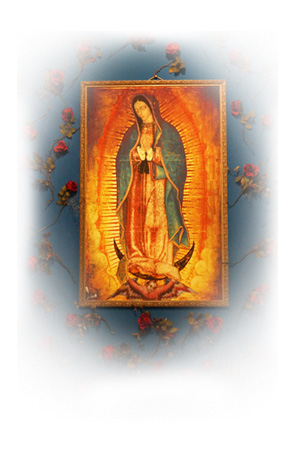
Medjugorje Message: September 25, 2025
Dear children! May this time for you be a time of prayer for peace. Thank you for having responded to my call.
River of Light
October 2025
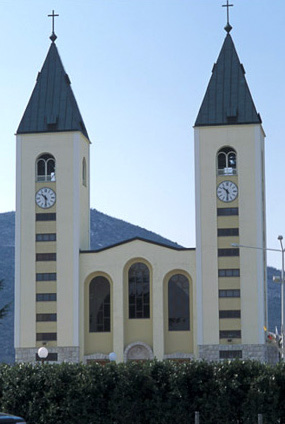 Our Lady’s message gives us something “short and sweet” in response to something “long and bitter”—a short and sweet call to PRAY FOR PEACE in the midst of a long and bitter time of peacelessness, division, hatred, and violence in our world and in our country. Daily we watch as the tragic polarization of our U.S. political ideologies escalates and our divisions deepen, with conflicting sides driven ever further into extreme camps of disinformation, propaganda, and separate echo chambers of intolerance for any open-hearted dialogue with opposing viewpoints.
Examining the origins of our great nation reveals this current situation to be deeply and distressingly “UN-American,” betraying our bedrock principle of “E Pluribus Unum” —“out of the many, One” : our founding national ideal of unity from diversity. Languishing in this present darkness of our lost union, we are watching helplessly as more and more gun violence erupts, whether in mass shootings, domestic crime, political assassinations, impulsive outrages, or the many protracted wars around the world.
Sacred Scripture tells us, “The people perish for lack of vision” (Prov 29:18), meaning that we desperately need authoritative guidance toward a “Good Orderly Direction.” (G.O.D.) Without sound leadership drawing us toward the transcendent values of peace, brotherhood, and solidarity, our fallen human condition naturally barrels wildly toward lawlessness, corruption, moral decay, anarchy/ despotism, and societal ruin. We are thirsting for a strong and steady hand to beckon us toward our common ground as human beings, hungering for an inspiring summons to “the better angels of our nature,” as Abraham Lincoln said during his time of national crisis.
Sadly, no such governmental guidance toward peace is being offered in our current chaos, which often feels like an unending nightmare or horror movie from which we cannot escape. No uplifting words of spiritual encouragement toward peace, reconciliation, mercy, mutual understanding, unity, or the importance of “not succumbing to division” are coming from our Capital. On the contrary, ongoing hatred, division, blame, and vengeance for one’s political “enemies” are the order of each day’s messaging, like gasoline poured upon flames to ignite the next tragic killings.
Our Lady knows that the whole world is in the grip of this demonic “peacelessness” that begins in the human heart. And it is in the human heart alone that violence, hatred, and unforgiveness must END if we are ever to have “world peace.” Thus Our Lady says simply: “May this time for you be a time of prayer for peace.” Our Lady knows that prayer’s greatest effect is not upon outer circumstances, but upon the “pray-er” : the one who prays.
Peace is an “inside job”—it must begin with the all-important INNER PEACE of the peacemaker. We cannot contribute in a meaningful way to “world peace” without first addressing and making peace with the peacelessness in our own minds and hearts. I cannot point fingers of judgment and blame at others who fail to make peace while my own interior demons of blind anger, resentment, bitterness, rage, envy, and unprocessed traumatic grief remain unhealed.
When the Vietnamese Buddhist monk and spiritual teacher, Thich Nhat Hanh, was asked, “Who is really to blame for the Vietnam War?“, he instantly replied, “I AM.” With zero projection of blame onto political leaders or others, this gentle monk took full responsibility for his own portion of the “peacelessness” that all humanity shares through our “interbeing” —the radically interconnected, interrelated nature of Reality that Christians call “the Body of Christ.” A monastic life of intense prayer enabled this insight.
Our Lady invites us to this same higher consciousness: the radical responsibility of making our time on Planet Earth—this era of dire unrest and peacelessness—“a time of prayer for peace.” May our “time of prayer for peace” change the one aspect of the world that can truly be changed: our own hearts, transformed to hearts of LOVE through the Indwelling Presence of our God-Who-Is-Love—the ONE whom Our Lady calls us to meet each day in silent Prayer of the Heart.
+ + + + + + +
Empty yourself. Sit quietly, content with the grace of God.
—St. Romuald
The purpose of silence is to break through the crust of the false self.
—Fr. Thomas Keating, OCSO
If God is the center of your life, no words are necessary. Your mere presence will touch hearts.
—St. Vincent de Paul
It is better in prayer to have a heart without words than to have words without a heart.
—Mohandas K. Gandhi
Contemplation is a wordless resting in the presence of God beyond all thoughts and images.
—James Finley
+ + + + + + +
We cannot solve our problems with the same thinking that we used when we created them.
—Albert Einstein
Division begins in the MIND and can be ended by the HEART.
—Robb Smith
+ + + + + + +
Science can purify religion from error and superstition; religion can purify science from idolatry and false absolutes. Each can draw the other into a wider world, a world in which both can flourish.
—St. John Paul II
+ + + + + + +
“Incarnatio continua!”: The Incarnation continues IN you, AS you.
+ + + + + + +
Find inner peace and thousands around you will find salvation.
The purpose of the Christian life is the acquisition of the Holy Spirit.
—St. Seraphim of Sarov
+ + + + + + +
LOVE is the most universal, the most tremendous and the most mystical of cosmic forces. LOVE is the primal and universal psychic energy. LOVE is a sacred reserve of energy; it is the blood of spiritual evolution.
—Fr. Pierre Teilhard de Chardin
+ + + + + + +
Every being exists in intimate relation with other beings and in constant exchange of gifts with each other.
—Fr. Thomas Berry, CP
+ + + + + + +
Recognizing “enoughness” is a radical act in an economy that is always urging us to consume more.
—Robin Wall Kimmerer
+ + + + + + +
Our Amma/Abba, Divine Source-Who-Is-Love,
Whole and Holy is Your Name.
May Your reign of Love come, Your will of Love be done
Here on earth, just as it is with You.
You give us each day all that we need
and You hold no accounts against us,
just as we wish to hold no accounts against each other or ourselves.
Leave us not in temptation of believing the lie of separation,
But deliver us from its consequences of acting out in fear
and the evil delusions of ego.
For Yours is the power and the glory of endless Life, Light, and Love
now and forever, amen.
—Aramaic translation of the Lord’s Prayer
+ + + + + + +
Hatred is not a creative force. Love alone creates. Suffering will not prevail over us, it will only melt us down and strengthen us.
—St. Maximilian Kolbe
+ + + + + + +
If we want to find a way forward through the greed, violence, destruction, and division that are defining our modern times, we must revolutionize our spirits. LIVING GRATEFULLY can pave the way. This way of being wakens us to our interdependence, increases empathy and compassion, and enhances our ability to be a force for good in the world—all tenets of a revolutionary spirit.
—Grateful.org
+ + + + + + +
The day we understand that the right wing and the left wing are part of the same bird—only then can the Eagle fly and America be great again.
—Bald Eagle photo caption
+ + + + + + +
You can relish a rainbow and a cup of tea, sunrise and a flock of birds, a cemetery walk and a friend’s newborn, the first blush of wildflowers in a patch of dirt and the looping rapture of an old favorite song. You can’t mend a world, but you can mend the hole in the polka-dot pocket of your favorite coat. They are not the same thing, but they are part of the same thing, which is all there is—life living itself through us, moment by moment, one broken beautiful thing at a time.
—Maria Popova
+ + + + + + +
From the birth of Christ until today, we have used Jesus to rationalize our own anger and fears. We all do it and the effects are seen everywhere: from the bitter polarization in our politics, to the misunderstandings between our churches, to the hate-filled rhetoric of our radio and television talk shows, to the editorials and blogs that demonize everyone who does not agree with them, to the judgmental way we talk about each other in our coffee circles. We are all venting, mostly unhealthily, but forever under the guise of bringing the “fire of love and truth” to the planet. However, if the truth be told, often the fire we’re bringing is more the fire of Babel than of Pentecost. Our moral fevers bring about more division than unity.
Daniel Berrigan rightly suggests that a real prophet makes a vow of love, not of alienation. It is easy to get this in reverse, and we frequently do. Granted, there is a fire that divides, even while remaining the fire of love and Pentecost. But it is a fire that is always respectful, charitable, and inclusive, never enflaming us with bitterness, as does so much of our current religious and moral rhetoric.
—Fr. Ron Rolheiser, OMI
+ + + + + + +
The recent decision to rename the U.S. Department of Defense the “Department of War” is not merely a bureaucratic adjustment but a symbolic act that alters the timber of America’s posture on the world stage. Such a shift is more than semantic; it is a declaration of orientation. “Defense” implies restraint, protection, and necessity. “War” implies aggression, conquest, and dominance.
Sun Tzu’s ancient classic, The Art of War, is not a simple manual but a profound meditation on the paradoxical art of achieving victory without fighting. Its viewpoint is that war is a last resort and necessary evil to be approached with humility and deep awareness of its costs. To trumpet the language of “war” at the institutional level ignores this basic insight, yet The Art of War cautions against exactly this: arrogance, excess, and spectacle. True strength is subtle, patient, and quiet with the strategy always to prevent unnecessary battle. Does the rebranding of the Department of Defense not show an attraction to the spectacle of conflict rather than its sober avoidance?
Great leaders understand that symbols carry weight equal to actions. Martin Luther King, Jr. and Mahatma Gandhi wielded words like weapons of peace; their timber of leadership was soft yet transformative. The present timber of our rebranding is one of noise, swagger, and bravado that makes “war” a part of our nation’s core identity. But war is never the measure of greatness; peace is the ultimate triumph. True leadership lies in restraint, vision, and the courage to choose peace over conflict.
—Diamond-Michael Scott
+ + + + + + +
T.H.U.G.—an acronym for “Traumatized Human Unable to Grieve.”
Violent and aggressive gang members who go into recovery are nearly always found to have massive unprocessed, unexpressed trauma and grief underlying their angry, abusive, criminal or antisocial behavior. To make peace with the outer rage, the inner sadness and emotional wounds must first be seen and addressed.
—Fr. Greg Boyle, SJ, founder of Homeboy Industries
+ + + + + + +
Modern physics reveals what ancient wisdom long knew: we are intrinsically interconnected beings. This deep interconnection explains why violence anywhere wounds us everywhere. We cannot escape our fundamental unity. While spirituality offers an antidote to violence, we need an intermediate step: learning to grieve. Our culture mistakes grief for weakness, but this rejection of mourning leaves us spiritually impoverished.
Personal and collective mourning binds communities together in the midst of tragedy. Crying, wailing, dancing, and drumming rituals express the deep pain of loss while affirming life’s preciousness. If we cannot grieve, we cannot truly love. When we fully feel the pain of loss, our hearts become more tender and open, and we become more compassionate toward others’ suffering. Grieving for the loss of life humanizes us; we become more fully human.
Jesus of Nazareth and Francis of Assisi both lived in violent times and taught that transcending violence requires an inner revolution: practices of silence, fasting, prayer, and solitude connect the surface self with the deeper self, where the divine is born. In this human capacity for mystical vision, one sees and loves from a different center and wellspring. Grief is a form of awakening to life on a deeper level, leading us inward to connect with the infinite Love. The way forward is inward. Our most urgent task today is helping younger generations discover their inner center where true transformation begins.
—Sr. Ilia Delio, OSF
+ + + + + + +
When I speak of love I am not speaking of some sentimental and weak response. I am speaking of that force which all of the great religions have seen as the supreme unifying principle of life. Love is somehow the key that unlocks the door which leads to ultimate reality. The command to love one’s enemy is an absolute necessity for our survival. Love even for enemies is the key to the solution of the problems of our world. Jesus is not an impractical idealist: he is THE practical realist.
He realized that every genuine expression of love grows out of a total surrender to God. So when Jesus said “Love your enemy,” he was not unmindful of its stringent qualities. Our responsibility as Christians is to discover the meaning of this command and seek passionately to live it out in our daily lives.
When Jesus bids us to love our enemies, he is speaking neither of eros (romantic love) nor philia (reciprocal love of friends); he is speaking of agapé—understanding and creative, redemptive goodwill for all people.
—Rev. Martin Luther King, Jr.
+ + + + + + +
Nonviolence means active love—pursuing this basic truth of reality, which is that we’re all one. We’re already united, reconciled, all children of a God of universal love. Therefore, we can’t kill anybody. We killed 100 million people in the last century. There are forty wars happening today. We are on track to blow up the planet and destroy it through catastrophic climate change. So, there’s nothing passive about love. Love is active, creative, daring, public nonviolence that resists all the forces of death.
—Fr. John Dear, SJ
+ + + + + + +
MLK, Jr.’s Principles of Nonviolence
- Nonviolence is a way of strength, not weakness: not lack of power but a different kind of power.
- The goal of nonviolence is winning the friendship and understanding of the opponent, not their humiliation or personal defeat. Eventual reconciliation is desired.
- The enemy must be seen not as an evil person, but a symbol of a greater systemic evil, of which they are also a victim. Effort is aimed at the greater evil rather than the opponent.
- Voluntary suffering for the sake of others has moral power as redemptive suffering. Willingness to bear pain, like Jesus on the cross, changes all the persons involved.
- The love ethic must be central, with our daily life drawn from this new source in thought, word, deed, and emotion.
- Nonviolence rests on a cosmic optimism that God/universe/ reality is finally on the side of justice and truth. Goodness and resurrection will have the final word.
—Fr. Richard Rohr, OFM
+ + + + + + +
Thought Management Toolbox: Making Peace in our Head
+ Thought Prevention: Practice Picky Thinking—just because you “have” a thought doesn’t mean you need to “think” it.
+ Thought Progression: Identify UFO’s—An Untruth leads to a False narrative that creates an Overreaction.
+ Thought Extraction: Uproot and Replant—Rather than let the untruth grow, give the lie a tug and replace it with God’s truth.
—Max Lucado
+ + + + + + +
From Salem to Selma, from Joseph McCarthy’s hearings to January 6, we’ve seen how fear, rage, and righteousness can turn neighbors into combatants. We are living, once again, in a season where polarization feels existential. How can we seek balance, cultivate virtue, and remember that harmony instead of conquest is the highest goal?
Practical strategies for our fractured age:
- Pause Before Reacting: Before reposting, retweeting, or raging online, take one mindful breath. This small act interrupts the cycle of escalation and invites clarity.
- Seek Balance Daily: Extremism thrives on overstimulation—constant media, constant outrage. Rest and quiet must balance action and noise. Create deliberate spaces of stillness and solitude.
- Build Right Relationship: Harmony begins with the self, then the family, then the community. Repair broken relationships where you can. Listen to others’ views.
- Cultivate Virtue as a Political Act: A well-ordered world starts with a well-ordered heart. Practice honesty, humility and compassion as public contributions to the whole.
- See the Human Behind the Belief: When confronted with someone whose views repel you, silently remind yourself of the shared humanity that connects you. Even within your disagreement, refuse to dehumanize another.
- Choose the Middle Way: Meet extremism with steadiness, not hysteria. Look for harmony rather than victory or sameness. Be water rather than fire, healer rather than inquisitor, bridge-builder rather than barricade-builder, balancer rather than avenger.
—Chocolate Taoist
+ + + + + + +
October 4: St. Francis of Assisi
St. Francis emphasized “orthopraxy“—LIVING the Gospel—over orthodoxy, for he saw Jesus as someone to not only believe in, but actually follow and imitate. So he focused on an imitation and love of the humanity of Jesus—not just the worship of his divinity—and championed the full and final implications of the Incarnation of God in Christ.
For Francis, the Incarnation is manifested everywhere. His Christ was cosmic yet deeply personal, his cathedral was creation itself, and he preferred the bottom of society to the top, always emphasizing inclusion of the seeming outsider over any “club of insiders.” More a mystic than a moralist, Francis preferred ego poverty to private perfection, because “Jesus became poor for our sake, so that we might become rich out of his poverty.”
—Fr. Richard Rohr, OFM
Prayer of St. Francis
Lord, make me an instrument of your peace.
Where there is hatred, let me sow love;
where there is injury, pardon;
where there is doubt, faith;
where there is despair, hope;
where there is darkness, light;
where there is sadness, joy.
O Divine Master, grant that I may not so much
seek to be consoled as to console;
to be understood as to understand;
to be loved as to love.
For it is in giving that we receive;
it is in pardoning that we are pardoned;
and it is in dying that we are born to eternal life.
+ + + + + + +
Wisdom from Pope Leo XIV
The moment when Jesus, during the last supper, offers a morsel to the one who is about to betray him…it is love’s last attempt not to give up. To love until the end: here is the key to understanding Christ’s heart. A love that does not cease in the face of rejection, disappointment, ingratitude. Instead of withdrawing, accusing, defending himself, Jesus continues to love.
True forgiveness does not await repentance, but offers itself first, as a free gift, even before it is accepted. Yet after the morsel is given to Judas, “Satan entered him,” as if evil, hidden until then, manifested itself after love showed its most defenseless face. For this reason, brothers and sisters, that morsel is our salvation: because it tells us that God does absolutely everything to reach us, even in the hour when we reject him.
Here forgiveness reveals all its power as the true face of hope. It is not weakness. It is the ability to set the other free, while loving him to the end. Jesus’ love does not deny the truth of pain, but it does not allow evil to have the last word. How many relationships are broken, how many stories complicated, how many unspoken words suspended. Yet the Gospel shows us there is always a way to continue to love. To forgive does not deny evil, but prevents it from generating further evil, so that resentment does not determine the future. One can offer a morsel even to someone who turns their back on us. We can move forward with dignity, without renouncing love.
Let us ask today for the grace to be able to forgive. As Jesus teaches us, to love means to leave the other free—even to betray us—believing that even that freedom, if wounded and lost, can be snatched from the deception of darkness and returned to the light of goodness. Forgiveness frees those who give it: it dispels resentment, restores peace, returns us to ourselves. Every betrayal can become an opportunity for salvation, if it is chosen as a space for a greater love. It conquers evil with good, preserving what is truest in us: the capacity to love.
To reject the contemplative dimension of any religion is to reject the religion itself, however loyal one may be to its externals and rituals. This is because the contemplative dimension is the heart and soul of every religion. It initiates the movement into higher states of consciousness. The great wisdom teachings of the Vedas, Upanishads, Buddhist Sutras, Old and New Testaments, and the Koran bear witness to this truth. Right now there are about two billion Christians on the planet. If a significant portion of them were to embrace the contemplative dimension of the gospel, the emerging global society would experience a powerful surge toward enduring peace. If this contemplative dimension of the Christian religion is not presented, the Gospel is not being adequately preached.