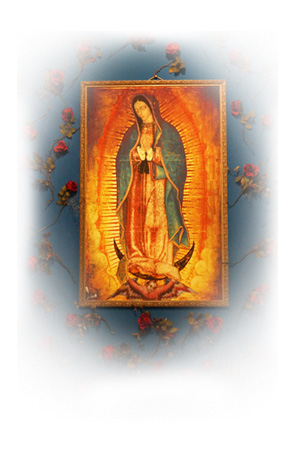
Medjugorje Message: January 25, 2026
Dear children! Today, I am calling you to be prayer and a blessing for all those who have not come to know God’s love. Little children, be different from others and be positive people of prayer and love towards God, that with your lives, you may be a sign of God’s love to others. I bless you with my motherly blessing and intercede for each of you before my Son Jesus. Thank you for having responded to my call.
River of Light
February 2026
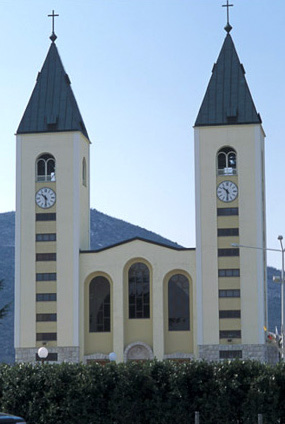 “Positive People of Prayer and Love“
“Be prayer and a blessing for all those
who have not come to know God’s love.”
But, O Blessed Mother, these are so seldom
the sweet, soft, lamb-like meek
who are easy to bless with one hand to their cheek,
our other hand in Christ’s own (bond unbroken),
“Being Prayer” without a single word spoken,
our hearts all aflame with charity….
No—
“For those who have not come to know God’s love”
rarely appear with the peace of the Dove.
They seem dumb (at best) and numb (at worst)
to their own humanity—a mob accursed!
Small broken men seeking childish validation
in violent acts of retaliation,
power brokers craving money, bullying weakness to be funny,
little boys overgrown by neglect and abuse,
little girls who were groomed as objects to use,
now become tools of sick culture’s cruel ends,
evading the justice toward which history bends.
Though standing in the shadow of a high church steeple,
“not knowing God’s love,” hurt people hurt people.
So Lady, today your calling is hard: Christ’s Unconditional Positive Regard!
You say, “Little children, be different from others.”
All those others within me who scroll through the posts?
And watch YouTube reels full of rages and boasts?
Fueling keyboard courage to accuse and indict?
Gathering steam and fury and reasons to fight?
“Be different from others” —such a difficult ask:
renouncing herd membership—our scariest task!
You seek trusting surrender to Indwelling Presence:
my faith that in all life, LOVE is the Essence.
But how can I go against the grain
of the world and myself in this body of pain?
“Be positive people of prayer and love towards God.”
I’m not a Buddhist monk on a Pilgrimage of Peace,
but those holy robed travelers have much to teach
about positive prayerful love in action—
silently witnessing “Unity, Compassion,”
their humble simplicity and radiant smiles,
frostbitten feet walking 2300 miles,
all to one profoundest end: to say “True peace begins within.”
Forgiving this brutal incivility,
this loss of respect for each one’s dignity,
in spirit I join them as a Pilgrim of Peace,
let daily meditation soothe my inner Savage Beast.
“That with your lives, you may be a sign of God’s love to others.”
For our nation and earth full of unhealed trauma,
with wounds freshly opened by each day’s deadly drama
to begin to be knit back together again
means we must become “DIFFERENT” women and men!
O Lady, you call us again and again:
Change from negative people who judge and berate,
demonize, divide, condemn, and hate,
to positive people of prayer and love—
Salt, Yeast, and Light for the world, from above.
Let us turn, let us turn, let us turn!
With conversion of hearts let us burn!
+ + + + + + +
PERENNIAL PEARLS . . .
Empty yourself. Sit quietly, content with the grace of God.
—St. Romuald
The purpose of silence is to break through the crust of the false self.
—Fr. Thomas Keating, OCSO
If God is the center of your life, no words are necessary. Your mere presence will touch hearts.
—St. Vincent de Paul
It is better in prayer to have a heart without words than to have words without a heart.
—Mohandas K. Gandhi
Contemplation is a wordless resting in the presence of God beyond all thoughts and images.
—James Finley
+ + + + + + +
We cannot solve our problems with the same thinking that we used when we created them.
—Albert Einstein
Division begins in the MIND and can be ended by the HEART.
—Robb Smith
+ + + + + + +
Science can purify religion from error and superstition; religion can purify science from idolatry and false absolutes. Each can draw the other into a wider world, a world in which both can flourish.
—St. John Paul II
+ + + + + + +
“Incarnatio continua!”: The Incarnation continues IN you, AS you.
+ + + + + + +
Find inner peace and thousands around you will find salvation.
The purpose of the Christian life is the acquisition of the Holy Spirit.
—St. Seraphim of Sarov
+ + + + + + +
LOVE is the most universal, the most tremendous and the most mystical of cosmic forces. LOVE is the primal and universal psychic energy. LOVE is a sacred reserve of energy; it is the blood of spiritual evolution.
—Fr. Pierre Teilhard de Chardin
+ + + + + + +
Every being exists in intimate relation with other beings and in constant exchange of gifts with each other.
—Fr. Thomas Berry, CP
+ + + + + + +
Recognizing “enoughness” is a radical act in an economy that is always urging us to consume more.
—Robin Wall Kimmerer
+ + + + + + +
Our Amma/Abba, Divine Source-Who-Is-Love,
Whole and Holy is Your Name.
May Your reign of Love come, Your will of Love be done
Here on earth, just as it is with You.
You give us each day all that we need
and You hold no accounts against us,
just as we wish to hold no accounts against each other or ourselves.
Leave us not in temptation of believing the lie of separation,
But deliver us from its consequences of acting out in fear
and the evil delusions of ego.
For Yours is the power and the glory of endless Life, Light, and Love
now and forever, amen.
—Aramaic translation of the Lord’s Prayer
+ + + + + + +
FEBRUARY PEARLS . . .
More people would be Christian if more people were Christ-like.
—Mahatma Gandhi
+ + + + + + +
In the West, there are “religions of the word.” In the East, there are “religions of silence.” The Word can only be heard in Silence.
—Fr. Emmanuel Spillane, OCSO
+ + + + + + +
Forgiveness is twice blessed. It frees the one forgiven from guilt, and the forgiver from bitterness. Forgiveness sheds light on the subject. It lets love, instead of judgment, shine in. Judgment curdles the soul; forgiveness invites the spirit to burst into bloom.
—Daphne Rose Kingma
+ + + + + + +
It seems all too easy for modern life to become one continuous rush tainted with frustration and a feeling that there is never enough time to do anything with care and sensitivity. So it is a very useful practice just to take one’s time. The truth is that if we can take pleasure in what we do and be mindful, we will find we have more time. Our relationship with time can change. Time becomes full of life rather than second by second stealing our life away.
—Paramananda
+ + + + + + +
May such calm of soul be mine, so as to meet the force of circumstances.
—Aeschylus
+ + + + + + +
It is hard, in the face of all the things that divide us, to see people who are different from us as brothers and sisters, as equally important citizens of the world, and as loved and valued by God as much as we are. We wear more than physical clothing to cover our naked selves; we cover them with ethnicity, language, religious identity, culture, political affiliation, ideology, moral judgments, and a whole gamut of private wounds and indignation. These are our outer garments.
But we also possess a deeper, inner garment. What lies beneath our outer garments?
At the Last Supper, when Jesus washes the feet of his disciples, “knowing that the Father had put everything into his hands, and that he had come from God and was returning to God…he took off his outer garments…and began to wash his disciples’ feet.” When Jesus takes off his outer garment, it means more than stripping off some physical clothing. To let go of the pride that blocks all human beings from stooping down to wash the feet of someone different than oneself, Jesus had to strip off a lot of other things (human pride, moral judgments, superiority, ideology, personal dignity) so as to wear only his inner garment.
Jesus’ inner garment was precisely his knowledge that he had come from God, was going back to God, and that therefore all things were possible for him. Our true inner garment is the reality that lies deeper than our race, gender, religion, language, politics, ideology, and personal history. Beneath these outer things, we bear the imprint of love and truth, the unspoken knowledge that, like Jesus, we too have come from God, are returning to God, and thus are capable of doing anything, including loving and washing the feet of others very different from us. Our inner garment is the image and likeness of God inside of us.
—Fr. Ron Rolheiser, OMI
+ + + + + + +
“Take my yoke upon you and learn from me, for I am meek and humble of heart, and you will find rest for your souls. For my yoke is easy and my burden light.” —Mt 11:29
Meekness is the summary of all Christian virtues: it is made up especially from benevolence and patience, of friendliness and respect for all souls, and even for all creatures, since a meek person treats things meekly as he does human beings. The art of contemplating divine things is the art of being calm. Meekness is made up of leniency and mercy, also, and a lucidity that sees human beings individually in the divine clarity, noticing only the reasons to trust and to love.”
—A Carthusian, The Prayer of Love and Silence
+ + + + + + +
True, Jesus gives us “rest.” But such rest is totally different from “resting up” in order to get back to the daily toils of life: different, too, from recreation or distraction or vacationing. This “rest for our souls” is intended by Jesus to be a real and genuine state of life, the natural condition in which a child of God habitually exists, and not just a passing phase of recovery.
This rest is an end in itself, a way of life rooted in the relationship to God as Father. Such rest is utter trust lived out moment by moment. But because it calls for the asceticism of continual surrender, it is “rest that requires effort.” To rest in this way means to allow God continually to be giving us his life, to have nothing come from our own devising, to allow God full room for acting as the true Creator of our being. Only the child easily sees it as normal for his father to care continuously for his needs and welfare.
But this rest that Jesus gives to those who become like him has a condition: “Take my yoke upon you and learn from me.” He does take away the burden of our slavery to artificial ideals, social conventions, materialistic values, the cult of pleasure and the body and numerous obsessions; but he does this only to give a yoke of his own. As creatures we are always going to be serving some “master”: it can be society, individual persons, a powerful group, some idea we’re obsessed with, or our own tyrannical will in the form of addiction to money, possessions, sex, drugs, alcohol, or the thrill of power and success. Any of these can be a cruel tyrant under which we will labor. Or we can serve and share the labor of Christ who is meek and humble of heart, inviting us to intimacy with the Father by sharing his destiny and mission.
—Fr. Erasmo Leiva-Merikakis
+ + + + + + +
Humanity and the entire Earth community currently exists in such dire circumstances that the most viable solutions will seem like impossible dreams to most everyone (at first). But this is apparently the way it has always been in our universe. At the greatest moments of transformations—what Thomas Berry calls “moments of grace” —the “impossible” happens.
If you consider the data on current wars, environmental destruction, political-economic corruption, social/racial divisions, and widespread psychological breakdowns, there seems to be little hope for humanity, and for other members of the biosphere.
But if, alternatively, you look at the fact of miracles—moments of grace—throughout the known history of the universe, it will dawn on you that there has always been an intelligence or imagination at work much greater than our conscious minds. Given that we cannot rule out moments of grace acting through us in this century and the next, we have no choice but to proceed as if we ourselves, collectively, can in fact make the difference.
—Bill Plotkin
+ + + + + + +
2026: Special Year of St. Francis
proclaimed by Pope Leo XIV
St. Francis’ message of peace is needed now more than ever. In this age, marked by so many seemingly interminable wars, by internal and social divisions that create mistrust and fear, he continues to speak. Not because he offers technical solutions, but because his life points to the authentic source of peace, Jesus Christ.
That peace is not limited to the relations between human beings, but extends to the entire family of Creation. This insight resonates with particular urgency in our time, when our common home is threatened and cries out under exploitation. Peace with God, peace among human beings, and with creation are inseparable dimensions of a single call to universal reconciliation. May St. Francis intercede to give us the courage to build bridges where the world raises up boundaries.
—Pope Leo XIV
+ + + + + + +
America needs St. Francis now more than ever. Now that kindness is countercultural, we need his extremes of wild charity to pull us back toward it.
Who was Francis of Assisi? Genius or crackpot? Both. Sensuous embracer of life or self-mortifying freak? Both. Exhibitionist or recluse? Anarchist or company man? Runaway rich kid or true voice of the rejected? Both, both, and both. In some versions of his life story, he’s a nicely behaved youth; in others he’s a profligate, a tearaway. After being captured in battle and imprisoned for a year, the changes begin.
Francis tears off his fancy clothes, kisses lepers, starts begging. He turns his back on privilege and gradually, via great humiliations, these impetuosities resolve themselves into the properly achieved Franciscan humor, a kind of continual outrageous sanctity. He’s living—actually living—by the words of Jesus: Love your neighbor, give it all away, praise God, and don’t worry about tomorrow. G.K. Chesterton imagined Francis as a lover: Francis was in love with God. So he did all the crazy zigzag things that lovers do. The feats, the ecstasies, the prostrations and abnegations.
Francis’ self-denial, his merry disdain of health and comfort and security, is a rebuke to our self-care. There are no safe spaces, and no guarantees—the only stability is the bottomlessness of divine love. The trapdoor held open by grace. So we take the hand of Francis, and down we go.
—James Parker
+ + + + + + +
In times like these, many things become too late. It will be too late to save this coastline or that ecosystem, this city or that species, this democracy or that economy. But it is not too late to love, and it never will be. Love will count, no matter what. Even on the last day of the world.
—Brian McLaren
+ + + + + + +
The spiral staircase is a symbol of the purification that gradually takes place through contemplative prayer. Every time we move to a new level of recognition of our weakness and dependence on God for everything, we experience a kind of inner resurrection. The more we realize how “unmanageable” our lives are—how helpless we are to practice the virtues and to imitate Jesus—the more life becomes an adventure in allowing the Spirit to move us and to accompany us in daily life.
—Fr. Thomas Keating, OCSO
+ + + + + + +
Morning Prayer
Loving God,
as this day opens before me, I pause to give thanks.
Thank you for the quiet gift of waking, for breath in my lungs,
light in the room, and time once more placed in my hands.
Help me to receive this day as it is—
not as a burden to endure, but as a grace to be lived.
May gratitude soften my heart, steady my thoughts,
and shape my words and actions.
Whatever this day brings, let me walk it attentively,
awake to small mercies, and faithful to what is asked of me.
Amen.
Evening Prayer
As the day draws to its quiet close, I pause before You,
O Lord, and let the noise settle.
In this soft light of evening, I look back over the hours
that have passed—the ones I cherished, the ones I hurried through,
the ones I struggled with—and I choose to meet them with gratitude.
Thank you for the breaths I scarcely noticed, for the simple moments
of kindness, for the unexpected graces woven into the ordinary.
Thank you for the people whose presence shaped my day,
for the strength to do what was required, and for
the patience to endure what was difficult.
Where I fell short, forgive me. Where I was anxious, quiet my spirit.
Where I tried to love, deepen that love. Where I forgot You, draw me back.
As night settles, let my heart rest in the assurance that nothing is wasted
in Your sight—not the joys, not the trials, not the imperfect efforts.
Teach me to see how gently You carried me through each moment.
Lord, receive this day, and let gratitude be the last word on my lips.
Grant me peaceful sleep, and prepare my heart to rise with hope in the morning.
Amen.
—Our Lady of Silence Abbey
+ + + + + + +
Feb 18th: ASH WEDNESDAY, the start of LENT
At all times there have been Christians who were so far betrayed into error by temperament or by false logic, as to think that nature was utterly tainted by the Fall, that God’s gifts were only snares, that we must refuse all comfort, fight all mirth, shake our heads over all enjoyment. Against that wet-blanket doctrine, Christmas is a salutary protest: God suckled by a Mother’s milk, among friendly creatures, recognized by simple hearts—yes, Bethlehem is the antidote. But Bethlehem—heaven finding a home on earth—is not all. Jordan, too, has its place in the Christian life: baptismal Jordan, the type of death, and separation and penance for wrong done. God’s gifts are not simply his birthday presents; they are the stepping-stones of mortification as well.
—Monsignor Ronald A. Knox
We must never allow a spirit of self-indulgence to take charge of our conduct; our guiding spirit should be one of self-sacrifice. At first this seems too hard—but it becomes lighter when we realize that we are only asked to mortify ourselves in order that Jesus may live in us. Our death to ourselves by mortification is his resurrection in us. And so we must learn to try in all situations to act for the sake of Jesus rather than for love of our own ease.
That means we must declare war on our self-seeking, and make it our constant aim to seek Jesus. It further means that we must try to accept cheerfully trials of soul, trials of body, trials from within, trials from without, trials from men, trials from work—and to see in them a new chance of uniting ourselves to Jesus in suffering, of lightening his cross, and of filling up what is wanting for the Church in the sufferings of Christ.
Does a spirit of mortification mean that we must undertake a program of penance? It is true that if people did more penance there would be many more raised to the prayer of true contemplation. On the other hand, indiscreet and imprudent attempts at inflicting penance upon oneself have often led to disaster. In general, those fasts that we can do with a genuine cheerfulness and that do not preoccupy us too much or puff us up to feel superior—those are sound. Penance should be done in a spirit of compunction, to atone for our sins, and in union with Our Lord, in the fellowship of his love and suffering.
—Dom M. Eugene Boylan, OCSO
+ + + + + + +
Wisdom from Pope Leo XIV
Be peacemakers…everywhere! Never be violent, neither with words nor with gestures. Never! Evil can only be overcome with good….Peace is built on respect for all peoples!
To reject the contemplative dimension of any religion is to reject the religion itself, however loyal one may be to its externals and rituals. This is because the contemplative dimension is the heart and soul of every religion. It initiates the movement into higher states of consciousness. The great wisdom teachings of the Vedas, Upanishads, Buddhist Sutras, Old and New Testaments, and the Koran bear witness to this truth. Right now there are about two billion Christians on the planet. If a significant portion of them were to embrace the contemplative dimension of the gospel, the emerging global society would experience a powerful surge toward enduring peace. If this contemplative dimension of the Christian religion is not presented, the Gospel is not being adequately preached.
—Fr. Thomas Keating, OCSO