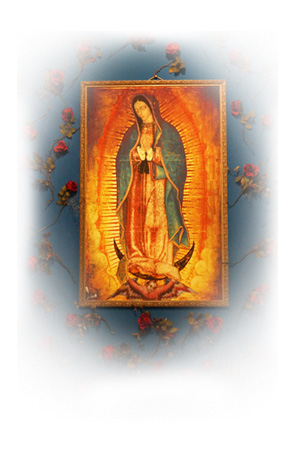
Medjugorje Message: July 25, 2025
Dear children! In this time of grace, when the Most High permits me to love you and lead you on the way of holiness, Satan wants to entangle you with the cord of peacelessness and hatred. Do not permit him to prevail, but, little children, fight for the holiness of every life. Thank you for having responded to my call.
River of Light
August 2025
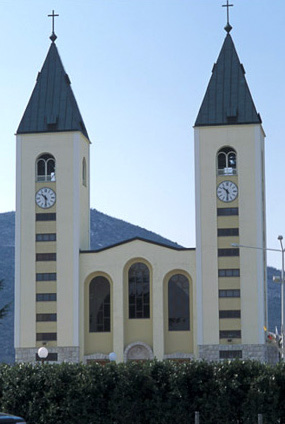 Our Lady’s theme this month is “The Way of Holiness.” From the first words of her message, she models and teaches us the meaning of “holiness.” We have often reduced the word to a binary term for “saintliness” (vs. “sinfulness), “goodness” (vs. “evil”), or “righteousness” (vs. “unrighteousness”). In fact, “holiness” is rooted in the Germanic word “hailaga” which means “wholeness” and refers not merely to moral or ethical purity, but to a Oneness or Allness that is whole, uninjured, undivided, intact, and complete. St. Thomas Aquinas conveyed this by defining holiness as “thinking and acting always with GOD as our end” —not divided inwardly through our thoughts being captured by other things, but living with a focused, undistracted devotion to the Divine in whatever we think, say, and do.
For a Christian, “holiness” means living in alignment with Ultimate Reality, which our modern physics calls “relational wholeness” and which we call GOD. Our God-Who-Is-Love flows through everything that exists, from the tiniest subatomic, infinitesimally small particles to the vast, cosmic, universal, ever-expanding “wave” of Infinite Life. And this “Whole” is completely interconnected in all its parts (holons) in an embedded network of “interbeing,” a great cosmic web of Love—a “relational wholeness” —for “God IS love.” (1 Jn 4:8)
Our Lady opens with the words: “In this time of grace, when the Most High permits me to love you and lead you on the way of holiness…” and immediately she has modeled the “holiness” that St. Thomas Aquinas described, for she attributes her presence in Medjugorje not to herself as an independent agent “acting on her own,” but to “the Most High” —the Ultimate Reality that flows through all of life as the God-Who-Is-Love and “permits” her to love and lead us “on the way of holiness” in “this time of grace.”
In these first few opening words, which we may easily ignore or overlook, Our Lady is already giving us a world of instruction. She exemplifies holiness as remaining focused consciously upon the Divine as her end, her purpose, her meaning, her power to “do,” her inspirer, her Creator, her sustainer, her everything. This is the Marian attitude of HUMILITY: taking any action in life with awareness and acknowledgment that we do nothing “on our own,” separate from the great web of “relational wholeness” that is GOD. This humility is the chief hallmark of “holiness” in all the saints.
Holiness is the “wholeness” of seeing God/Love in ALL things. Scripture says that all creation is “good” in God’s view; in its “wholeness” nothing is missing, lacking, broken, wanting, unsound, or incomplete. Within human beings, this “wholeness” is expressed in the gradual, evolving INTEGRATION of all aspects of the self—physical, emotional, psychological, spiritual—into a sense of health and well-being, along with a moral consistency and purpose aimed toward loving relationship with self, God, and others.
In the Hebrew and Aramaic languages that Jesus and Mary spoke, the word for “wholeness” is “SHALOM” —“peace.” Indeed, “peace is the tranquility of order” (St. Thomas Aquinas), where nothing is lacking or amiss, but there is a unity of fullness, beauty, love, and abundant life. “Our Lady Queen of Peace/Shalom” may thus also be called “Our Lady Queen of Holiness/Wholeness“! To be on the “way of holiness” is to be on the path of peace and love, flowing in the Divine stream of “relational wholeness” that gushes throughout the entire cosmic web of interconnectedness, from the cellular to the galactic levels of life.
Entering this holy realm of our God-consciousness, Our Lady says, “Satan wants to entangle you with the cord of peacelessness and hatred.” Clearly “peacelessness and hatred” are antithetical opposites of the “Way of Peace and Love” that God has created in the great cosmic web of life that science calls “relational wholeness.” Peacelessness and hatred are in fact “obstacles” and “adversaries” to peace and love—the Ultimate Reality that we call “God.” And indeed, this is the root meaning of the Hebrew word “Satan“: an opposer, obstructor, adversary. But he’s not “out there” —he’s “in here“!
In our human condition, this appears as satanic ego, which—as in the Genesis story of Adam and Eve—tempts each one of us to defy or negate the “relational wholeness” of aligning ourselves with the Divine web of interconnected life (obeying God’s will), and instead, seduces us to act from a “separate self sense” —the false but alluring belief that we can “go it alone,” independent of the interrelated cosmic web of Divine Providence, and apart from God’s grace…manipulating life only in the interests of “Me, Me, Me.”
Our Lady says that this satanic ego, this obstructing principle within us “wants to entangle us with the cord of peacelessness and hatred.” In its most sensational and extreme victories, today we see satanic ego presiding over global wars, genocide, slavery, human trafficking, humanitarian crises of starvation, and nations losing their democratic freedom to oligarchs and dictators. But in the unseen corners of every human life, there are “entangling cords” of satanic ego, often disguised as “positive” endeavors, like perfectionism, moral rectitude, winning performance, and hyper-achievement—all of which may carry the hidden personal fallout of “peacelessness and hatred” in one’s life, “behind the scenes” of public glory. So even the “good” may be “entangled” ?
What constitutes satanic ego involvement is always the seductive intention to assert SELF-WILL over Divine Will in whatever we think, say, or do. Indeed, when this happens—whether at the personal and individual level or at the larger community/ national/ global level—a world of suffering follows, as the demonic “entangling cord of peacelessness and hatred” chokes off our freedom in Christ and zip-ties us with the anxiety, depression, despair and grief that are the wages of Satan’s separate-self-centered lifestyle. Each person must wrestle with the “separate self sense” that seeks to “entangle” and “prevail” in our life through the Satanic lie of separation.
Our Lady concludes her message: “Do not permit him to prevail, but, little children, fight for the holiness of every life.” How can we answer this call to “not permit” satanic ego to prevail? Our Lady’s favorite answer has always been: “Pray! Pray! Pray!” In PRAYER we grow and maintain our connection to God-Who-Is-Love and thereby live increasingly in conscious alignment with Divine Will as it flows throughout the whole cosmic web of Creation—in “holistic harmony” as “holons within the Whole” that God designs and expands from moment to moment through Divine Presence and Action.
The more we are grounded in prayer, the less we are likely to become “entangled in the cord” of satanic ego’s “peacelessness and hatred.” Along with a daily discipline of silent prayer with open heart for Divine guidance, the Sacraments of the Church are meant, above all, to unite us with God in the Wholeness that is “holiness.” Participation in every available Sacrament is instrumental in our “not permitting Satan to prevail” within us—especially the frequent reception of Reconciliation and Eucharist—the quintessential practices of union with the Whole of Ultimate Reality.
Finally, how do we “fight for the holiness of every life“? (Yes, Our Lady is asking us to “fight“! First and foremost, against our own satanic ego—and then, taking it to the streets.) We can add to our daily prayer practice the disciplines of fasting, almgiving, works of mercy, and our civic duty at the ballot box to advocate for “the holiness of every life” by voting in accordance with the Church’s teaching on the Dignity of Each Human Person, without exception. In these ways we give witness to the “relational wholeness” of our God-Who-Is-Love by exemplary service to the poor, marginalized, immigrants, victims of war, and ALL who cross our path.
In short, we “fight for the holiness of every life” most effectively by our example of living a whole/holy life ourselves. Beyond any words we say, our life speaks. Because of the the interconnectedness of all Reality, our small, individual actions have unimaginably far-reaching effects as they flow into the cosmic web of Wholeness by the grace of God.
+ + + + + + +
Empty yourself. Sit quietly, content with the grace of God.
—St. Romuald
The purpose of silence is to break through the crust of the false self.
—Fr. Thomas Keating, OCSO
If God is the center of your life, no words are necessary. Your mere presence will touch hearts.
—St. Vincent de Paul
It is better in prayer to have a heart without words than to have words without a heart.
—Mohandas K. Gandhi
Contemplation is a wordless resting in the presence of God beyond all thoughts and images.
—James Finley
+ + + + + + +
We cannot solve our problems with the same thinking that we used when we created them.
—Albert Einstein
Division begins in the MIND and can be ended by the HEART.
—Robb Smith
+ + + + + + +
Science can purify religion from error and superstition; religion can purify science from idolatry and false absolutes. Each can draw the other into a wider world, a world in which both can flourish.
—St. John Paul II
+ + + + + + +
“Incarnatio continua!”: The Incarnation continues IN you, AS you.
+ + + + + + +
Find inner peace and thousands around you will find salvation.
The purpose of the Christian life is the acquisition of the Holy Spirit.
—St. Seraphim of Sarov
+ + + + + + +
LOVE is the most universal, the most tremendous and the most mystical of cosmic forces. LOVE is the primal and universal psychic energy. LOVE is a sacred reserve of energy; it is the blood of spiritual evolution.
—Fr. Pierre Teilhard de Chardin
+ + + + + + +
Every being exists in intimate relation with other beings and in constant exchange of gifts with each other.
—Fr. Thomas Berry, CP
+ + + + + + +
Recognizing “enoughness” is a radical act in an economy that is always urging us to consume more.
—Robin Wall Kimmerer
+ + + + + + +
Our Amma/Abba, Divine Source-Who-Is-Love,
Whole and Holy is Your Name.
May Your reign of Love come, Your will of Love be done
Here on earth, just as it is with You.
You give us each day all that we need
and You hold no accounts against us,
just as we wish to hold no accounts against each other or ourselves.
Leave us not in temptation of believing the lie of separation,
But deliver us from its consequences of acting out in fear
and the evil delusions of ego.
For Yours is the power and the glory of endless Life, Light, and Love
now and forever, amen.
—Aramaic translation of the Lord’s Prayer
+ + + + + + +
The harmonic of the universe is wholeness, not perfection. More specifically, it is wholeness that involves differentiation. Fusion is a union that sacrifices differentiation; wholeness retains differentiation. Without wholeness, we hear only the clanging noise of the various parts of ourselves, banging together. Without differentiation, we hear only the pure sound of a single tone, but no harmonics.
If you are on the path of increasing wholeness, you will hear harmony, not just the cacophony of a fragmented self. You will also sense the energy of the larger whole—which goes beyond your own. You will occasionally be thrilled at being simply a small tool put to excellent use. You will be comforted in knowing that we are all interconnected. Love for others becomes the most meaningful form of self-love, and care of the earth becomes care of self. Living wholeness is to live with an openness of mind and heart, encountering others not as strangers, but as parts of one’s self.
—David Benner
+ + + + + + +
The Semitic mind, the Indigenous mind, and the Eastern mind (all closer to the mind of Jesus) are much more comfortable with paradox, mystery, and nondual thinking than the Western mind which has been formed by Greek logic, which is very clear, consistent and helpful by being dualistic. Many in the West stop at dualism and then struggle to deal with death, suffering, the illogical nature of love, and an honest notion of God, Mystery or infinity.
Human wholeness has nothing to do with perfection. Wholeness has to do with embracing the whole of who you are, which includes your shadow as well as your light, the broken parts as well as the whole parts of you. Divine perfection is the ability to recognize, forgive, and include imperfection, just as God does. Nondual thinking and seeing is the change that makes love, mercy, patience, and forgiveness possible.
—Fr. Richard Rohr, OFM
+ + + + + + +
Attending to Wholeness
We’re encouraged in the work of Inner Christianity to “work with delight,” to carry a disposition of joy into our work of catching ourselves abandoning that which our heart loves most—that is, God or Presence itself. Recognizing that it is only joy and delight that will sustain our search for that pearl of great price—a life lived in conscious connection with our Source. To pursue the spiritual journey with wholeheartedness means making the path our own.
Rest is also needed to tend to wholeness. A rest from multitasking, transacting, comparison and ambition. A surrender to what is and an acceptance of the myriad gifts we can easily take for granted. Taking inventory of life’s gifts was at the core of the traditional practice of Sabbath. The invitation to cease work to rest in acknowledging that everything we have received is a blessing, and to luxuriate in Presence itself as a way to return to one’s vibrational center.
Sabbath challenges the notion of “progress” on the spiritual journey by reminding us that we are already and always on sacred ground. The gifts of grace are present and abundant; the time to live is now, this moment, this day. We are already home. May wholeheartedness lead the way.
—Jonathan Steele
+ + + + + + +
We all deeply yearn to feel our connection to the Whole and to our Source. If we can truly attend to the Wholeness that is, we would be in a state of unity. It would mean complete acceptance of What Is. We could recognize and integrate all parts of ourselves and others, the light and dark sides. There would be a balance between our thoughts, emotions, and actions. This is what Inner Christianity aims us toward.
When I am not oriented to the Whole, things are fragmented and imbalanced. On a personal level, it is quite difficult to embrace the Whole in this world that includes so much inhumanity to humans. We can all see the greed, cruelty, and violence in the world at large. Our reaction to either recoil or lash out against it with our own violence is an opposition to reality that manifests as anger, judgment, fear, and resentment. These only increase our resistance to What Is. How can we truly surrender and live in harmony with What Is?
It seems critical to accept the paradoxical nature of reality. This world is a clash of contradictions. God is One and God is Three. Jesus was killed, yet Jesus lives. Light is a wave, and it is a particle. Matter and energy are different forms of the same thing. If we can reconcile opposite ideas, we can surely live from a more holistic perspective. We learn to say “Yes…AND…” Learning to love paradox undermines our tendency toward dualistic thinking, leading us to wisdom, tolerance, and forgiveness.
—Todd Buchanan
+ + + + + + +
Healing within is inseparable from healing in the world around us. “As within, so without; as above, so below; as the universe, so the soul” is an ancient spiritual truth: our inner state reflects and shapes the outer world. In Centering Prayer, wholeness is not something we achieve through effort but something we uncover through simple consent. In silent surrender to God’s presence and action within, we allow the false self—shaped by the desire for control, affection and security—to fall away. What remains is the True Self, grounded in divine love. This is the root of inner wholeness.
This healing does not stay limited to our inner world. Our transformation ripples outward, restoring relationships, communities, and how we live and care for our planet Earth. Thus, to attend to wholeness is to align ourselves with the deeper truth—that we are not separate, but intimately woven into the fabric of life.
—Alexandra Vandenberg
+ + + + + + +
The awakening of the eye of faith, which is the awakening of the contemplative process, is to begin to see the Divine Presence in everything. You see everything as it is, but you also see it in its Source and the presence of God, and then you are meeting God in the physical presence of other people and things. This is the Presence that predominates in deep prayer or contemplative prayer. When it’s established, the fruits are available in everyday life in the awareness of the presence of God.
To see God as PRESENT is an enormous elevation of the capacity to see, because it’s seeing the Source and the Love that are present in the smallest particle that we know of, and beyond. A new level of Christian life opens up: doing what has to be done without self-reflection. This is non-duality. This is heaven on earth.
—Fr. Thomas Keating, OCSO
+ + + + + + +
August 15th: The Assumption of the Blessed Virgin Mary
In this great Solemnity and Holy Day, we celebrate the BODILY Assumption of Our Lady into heaven at the end of her life. It begs the question of the often-ignored role of our BODY in the Spiritual Journey. Far from being the “last place” we should look (after our intellect, emotions, and will) for growth in intimacy with God, for contemplatives and mystics, the BODY is in fact the first place we need to develop awareness and sensation of the Divine PRESENCE. An awareness that Mary undoubtedly had!
* * * * * * * * * * * * * * * * * * * * *
Sometimes you can feel God in the body—times when the presence of God becomes a living thing that breathes and walks within us and alongside us. If you are open and willing to work to establish a connection, you can feel God in the body. The book, The Practice of the Presence of God by Brother Lawrence expresses much about this experience.
The question of PRESENCE—of God, of Christ, of Mary—is always one of intimacy, and while the intellect is a great tool, it doesn’t have SENSATION. Inner Christianity is a relationship with God that begins in the BODY with a connection to one’s “Sensation of Being.” We can feel the Blood of Christ, the Body of Christ.
—Lee Van Laer
We awaken in Christ’s body
as Christ awakens our bodies,
and my poor hand is Christ, He enters
my foot, and is infinitely me.
I move my hand, and wonderfully
my hand becomes Christ, becomes all of Him
(for God is indivisibly
whole, seamless in His Godhood).
I move my foot, and at once
He appears like a flash of lightning.
Do my words seem blasphemous?—Then
open your heart to Him
and let yourself receive the one
who is opening to you so deeply.
For if we genuinely love Him,
we wake up inside Christ’s body
where all our body, all over,
every most hidden part of it,
is realized in joy as Him,
and He makes us, utterly, real,
and everything that is hurt, everything
that seemed to us dark, harsh, shameful,
maimed, ugly, irreparably
damaged, is in Him transformed
and recognized as whole, as lovely,
and radiant in His light,
he awakens as the Beloved
in every last part of our body.
—Symeon the New Theologian (949-1022)
+ + + + + + +
We too often think of fighting as “fighting against.” I have learned that when you “fight against” someone or some policy, that person or policy may actually be reinforced. Rather, in this spiritual journey toward emancipation, we are called to fight for a vision that can be shared. We fight for a world that is inclusive of all creation. We fight for an economy of inclusion.
We realize emancipation when we combine radical acceptance with fighting for a vision. Embracing ALL with care and fighting for an economy that benefits the 100% will liberate us from the shackles of polarization and division. We are called to let God flame up in our lives into a communal fire. This one body of creation is in a single great struggle. Sink into your being. Listen deeply to where you are called to act. The contemplative life is faith in action.
—Sr. Simone Campbell
+ + + + + + +
The call of the Christian to be a peacemaker is clear and unequivocal. The danger is that we will be drawn to interact at a materialistic level, working only at economics or politics, and not make the unique contribution we can as persons of faith, empowered in oneness with Christ, for true and lasting peace. The only way to true holiness is to die to the false self—the self that is made up of what we do and what we have and what we think others think of us—so that the True Self, that beautiful image of God that ever comes forth from Divine creative love, and not from our efforts, can emerge.
—Fr. Basil Pennington, OCSO
+ + + + + + +
A Christianity that promises to protect us from the world cannot help us learn to live responsibly within it. A faith that sees nature as merely the stage for human salvation cannot inspire the ecological conversion our planetary crisis demands. A religion that is primarily therapeutic cannot provide the prophetic voice that challenges the systems of domination and exploitation destroying the earth.
Christianity began as the radical personalization of God but wound up being primarily therapeutic—often promoting radical dependency on external power, a “consumer product” designed to meet our psychological needs, rather than a transformative encounter with ultimate reality. Therapeutic Christianity continues to treat the natural world as a backdrop for human drama rather than as a sacred community, of which humans are called to be conscious participants. This can reduce salvation to a personal rescue mission from a fallen world rather than participation in the world’s transformation.
The divine is not separate from the natural order but is the very energy and direction of natural evolution itself. Religion should be at the very heart of evolutionary development, a phenomenon integral to the whole in evolution—faith in the Whole.
—Sr. Ilia Delio, OSF
+ + + + + + +
When we can let go of what other people think and own our story, we gain access to our worthiness—the feeling that we are enough just as we are and that we are worthy of love and belonging. When we spend a lifetime trying to distance ourselves from the parts of our lives that don’t fit with who we think we’re supposed to be, we stand outside of our story and hustle for our worthiness by constantly performing. “There is a crack in everything. That’s how the light gets in.” (Leonard Cohen) Our imperfections are not inadequacies; they are reminders that we’re all in this together—imperfectly, but together.
—Brené Brown
+ + + + + + +
A holon is a whole that is part of other wholes. For example, a whole atom is part of a whole molecule; a whole molecule is part of a whole cell; a whole cell is part of a whole organism. Reality is composed of neither wholes nor parts, but of whole/parts, or holons.
—Ken Wilber
+ + + + + + +
We think that by protecting ourselves from suffering, we are being kind to ourselves. The truth is we only become more fearful, hardened, and alienated. We experience ourselves as being separate from the whole. This separateness becomes like a prison for us—a prison that restricts us to our personal hopes and fears, and to caring only for the people nearest to us. Curiously enough, if we primarily try to shield ourselves from discomfort, we suffer. Yet, when we don’t close off, when we let our hearts break, we discover our kinship with all beings.
—Pema Chodron
+ + + + + + +
Wisdom from Pope Leo XIV
Every human person possesses an inherent dignity, bestowed by God himself. I urge all parties involved in conflicts to recognize this dignity and to end every action that violates it. I call for negotiations aimed at securing a future of peace for all peoples, and for the rejection of anything that might jeopardize it. My heart is close to all those who are suffering due to conflict and violence throughout the world. I entrust to Mary, Queen of Peace, the innocent victims of conflicts and those leaders who have the power to resolve them.
To reject the contemplative dimension of any religion is to reject the religion itself, however loyal one may be to its externals and rituals. This is because the contemplative dimension is the heart and soul of every religion. It initiates the movement into higher states of consciousness. The great wisdom teachings of the Vedas, Upanishads, Buddhist Sutras, Old and New Testaments, and the Koran bear witness to this truth. Right now there are about two billion Christians on the planet. If a significant portion of them were to embrace the contemplative dimension of the gospel, the emerging global society would experience a powerful surge toward enduring peace. If this contemplative dimension of the Christian religion is not presented, the Gospel is not being adequately preached.
– Fr. Thomas Keating, OCSO