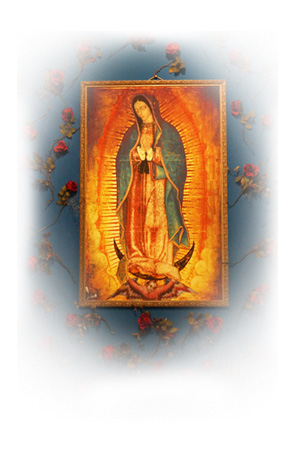
Medjugorje Message: October 25, 2026
Dear children! A fire of hatred and wars is spreading in the hearts of people who do not want peace but their own weak interests. That is why, little children, you be prayer and my extended hands of love and peace for all those who are far from my motherly heart. Pray more strongly and more for the peace that God desires to give you but you do not want it. I am with you and I am praying that peace may prevail and reign in every heart. Thank you for having responded to my call.
River of Light
November 2026
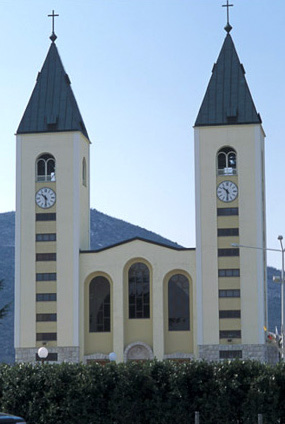 You Do Not Want Peace
“A fire of hatred and wars is spreading in the hearts of people who do not want peace but their own weak interests.”
Ahh the tragic rub of having free will!
We make a move and all the universe rushes to join.
But what of these disordered desires,
these wayward wants aimed in a million directions,
none toward peace?
With weak interests driving our lives
(any goal less than Love-Who-is-God)
the incendiary Self sends our world up in flames:
“a fire of hatred and wars spreading in the hearts”
and soon filling the algorithms of the feeds that glut
our mind, soul and strength
through the capture of our
Attention.
Weak interests of material consumption, status branding,
illusions of control, and winning every meaningless
race to the bottom
of our humanity.
“That is why, little children, you be prayer and my extended hands of love and peace for all those who are far from my motherly heart.”
And this will mean contemplation and action, praying and serving
love and peace to the least lovable and peaceful people you know:
those “far from the motherly heart” of warm beating compassion—
least Immaculate, least Merciful, least Grace-filled, least Wise—
including, first and foremost,
yourself.
For Mary Queen of Peace confronts each of us, saying:
“Pray more strongly and more for the peace that God desires to give you but you do not want it.”
How sad and sorrowful the tears of heaven must be!
Lest we ever blame this colossal mess
upon an uncaring God—this “fire of hatred and wars”
burning out of control, destroying our sister Mother Earth,
our neighborly relations with other nations,
civility within our own homeland,
and tolerance of our nearest kith and kin—
none of it God’s Desire!
For God’s Desire and our desires are out of alignment—
they are not One.
God’s Desire: love and peace in all and everything.
Our desires: Self—“our own weak interests,”
hardly worthy of the name “desire”
but the shoddy use we make these days of the
unique and inviolable gift of our humanity: free will.
Even Our Lady while urging our prayer for peace
(God’s Desire for us)
stops short of telling us what to desire,
just respectfully states the obvious:
“YOU DO NOT WANT IT.”
“I am with you and I am praying that peace may prevail and reign in every heart.”
Thankful in this month of Thanksgiving
for your “with-ness” in spite of it all,
your tireless acceptance of our obtuse response,
your loyal companioning through these dark hours of history.
Let us pray for a One-ing of our wants
with what Our Lady wants for us:
the right ordering of our small desires
in alignment with Divine Desire, trusting
when our will conforms to Love’s Spirit
we will find the Holy Grail underlying all our life’s weakest wants
and Peace will come to the earth.
+ + + + + + +
PERENNIAL PEARLS…
Empty yourself. Sit quietly, content with the grace of God.
—St. Romuald
The purpose of silence is to break through the crust of the false self.
—Fr. Thomas Keating, OCSO
If God is the center of your life, no words are necessary. Your mere presence will touch hearts.
—St. Vincent de Paul
It is better in prayer to have a heart without words than to have words without a heart.
—Mohandas K. Gandhi
Contemplation is a wordless resting in the presence of God beyond all thoughts and images.
—James Finley
+ + + + + + +
We cannot solve our problems with the same thinking that we used when we created them.
—Albert Einstein
Division begins in the MIND and can be ended by the HEART.
—Robb Smith
+ + + + + + +
Science can purify religion from error and superstition; religion can purify science from idolatry and false absolutes. Each can draw the other into a wider world, a world in which both can flourish.
—St. John Paul II
+ + + + + + +
“Incarnatio continua!”: The Incarnation continues IN you, AS you.
+ + + + + + +
Find inner peace and thousands around you will find salvation.
The purpose of the Christian life is the acquisition of the Holy Spirit.
—St. Seraphim of Sarov
+ + + + + + +
LOVE is the most universal, the most tremendous and the most mystical of cosmic forces. LOVE is the primal and universal psychic energy. LOVE is a sacred reserve of energy; it is the blood of spiritual evolution.
—Fr. Pierre Teilhard de Chardin
+ + + + + + +
Every being exists in intimate relation with other beings and in constant exchange of gifts with each other.
—Fr. Thomas Berry, CP
+ + + + + + +
Recognizing “enoughness” is a radical act in an economy that is always urging us to consume more.
—Robin Wall Kimmerer
+ + + + + + +
Our Amma/Abba, Divine Source-Who-Is-Love,
Whole and Holy is Your Name.
May Your reign of Love come, Your will of Love be done
Here on earth, just as it is with You.
You give us each day all that we need
and You hold no accounts against us,
just as we wish to hold no accounts against each other or ourselves.
Leave us not in temptation of believing the lie of separation,
But deliver us from its consequences of acting out in fear
and the evil delusions of ego.
For Yours is the power and the glory of endless Life, Light, and Love
now and forever, amen.
—Aramaic translation of the Lord’s Prayer
+ + + + + + +
NOVEMBER PEARLS…
Morning Prayer
Lord Jesus Christ, as we begin this day, teach us to receive one another with patience, humility and respect. Help us to listen without preparing our reply, to disagree without causing hurt, and to recognize the dignity of those whose lives and views differ from our own. In our community, our homes and our workplaces, keep us attentive to the person before us. May familiarity never make us careless, nor authority make us forgetful of our calling to serve. Give us courage to acknowledge our faults, grace to accept correction, and generosity to forgive. Let our words be truthful and kind, and our actions show the love we profess. Through the prayers of Our Lady of Silence, give us quiet hearts that make room for others, so that all whom we meet today may find themselves heard, valued, and welcomed. Amen.
—Our Lady of Silence Abbey
+ + + + + + +
First come back to yourself from the things outside you
and then give yourself back to the One who made you.
—St. Bruno
+ + + + + + +
St. John’s Gospel teaches deep incarnation: the sarx (flesh/material) that the Word of God became NOT ONLY weds Jesus Christ to other human beings in the human species. It also reaches beyond us to join the Incarnate One to the whole evolving biological world of living creatures and the cosmic dust of which whey are composed.
—Sr. Elizabeth Johnson
+ + + + + + +
The measurements and observations of the early Greek scientists and philosophers led them to conceive of the world as three-dimensional rather than a flat earth. They called this new awareness catholicity from “kath’houlou,” meaning “according to the whole” or having a sense of wholeness. In the second century Ignatius of Antioch borrowed the Greek term “catholic” to name the new awareness of divine reality immanently present that was ushered in by the risen Christ and celebrated in the Eucharist.
The root meaning of catholicity is thus this newly discovered consciousness of an individual person belonging to the whole. It is about cosmic consciousness, not religious membership. It referred to the essential nature of reality, not external manifestations. How are we to understand the “whole” today?
A single sacred community does not mean homogeneity—one final, victorious creed or worldview. Rather, it means a unity in which difference increases. Union differentiates. The more deeply things are joined, the more fully each becomes itself—which is the exact opposite of how every religious or secular empire has understood unity.
Only love is a union that differentiates rather than dissolves—not love as a sentiment but as a structural principle of the universe, the unitive energy that makes wholes without erasing parts. We see this in nature, in the “implicate order” whereby what appears separate and unrelated at the surface, actually remains at its cosmic roots, a single unbroken reality. An example is the underground “wood wide web” of trees communicating and supporting each other.
Nature achieves what we have never managed: a community of genuinely different beings interacting, communicating, diverging, and living at peace unless something threatens its life. It has deep relationality without requiring agreement. It has unity without uniformity. It is a distributed intelligence with no magisterium. Nature is, in the root sense of the word, “catholic,” and it never needed an institution or a doctrine to become so.
Where does this leave us—the one species that has produced libraries on wholeness and cannot manage a holiday dinner without arguments or conflict?
—Sr. Ilia Delio, OSF
+ + + + + + +
We will all have regrets in our lives. Thomas Aquinas wrote: “Every choice is a renunciation.” For this reason, we find it difficult to make hard choices, particularly as they pertain to any type of permanent commitment. We want the right things, but we do not want to forgo other things. We want it all!
But we can’t have it all, none of us—no matter how full of talent, energy, and opportunity we are; and sometimes it takes us a long time to properly understand why.
If the world was only fair, we’d have no broken dreams. But our frustrations ultimately tap into a deeper root: the inadequacy of life itself. Life, this side of eternity, is not whole. We, this side of eternity, are not whole. This side of eternity, nothing is whole. In the words of Karl Rahner: “In the torment of the insufficiency of everything attainable we ultimately learn that in this life all symphonies must remain unfinished.”
This leads to the simple (though not-easily-digestible) fact that we can’t have it all or do it all. Our lives have very real limits, and we need to stop crucifying what we have and have achieved with the nails of what we haven’t got and haven’t achieved. Despite the current myth to the contrary, no one gets it all!
Most of us can relate to some of these regrets: I’ve raised my children well, but now I will never go anywhere professionally. I’m very successful at work, but less successful as a spouse and parent. I never married for the wrong reasons, but now I am single and alone. I’ve sacrificed ordinary life for an ideal, but now I fiercely miss what I’ve had to give up. I’ve never compromised my principles, but that has brought a brutal loneliness into my life.
It’s never a matter of living with regrets or without them. Everyone has regrets. Hopefully, though, we have chosen the regrets we can best live with.
—Fr. Ron Rolheiser, OMI
+ + + + + + +
—St. Hildegard of Bingen
+ + + + + + +
—Fr. Henri Nouwen
+ + + + + + +
Wisdom from Pope Leo XIV
To reject the contemplative dimension of any religion is to reject the religion itself, however loyal one may be to its externals and rituals. This is because the contemplative dimension is the heart and soul of every religion. It initiates the movement into higher states of consciousness. The great wisdom teachings of the Vedas, Upanishads, Buddhist Sutras, Old and New Testaments, and the Koran bear witness to this truth. Right now there are about two billion Christians on the planet. If a significant portion of them were to embrace the contemplative dimension of the gospel, the emerging global society would experience a powerful surge toward enduring peace. If this contemplative dimension of the Christian religion is not presented, the Gospel is not being adequately preached.
—Fr. Thomas Keating, OCSO